

Starting a company in Europe
Company formation in Europe gives founders an EU legal entity that trades across the single market — 27 member states and 452 million consumers — under a predictable legal framework.
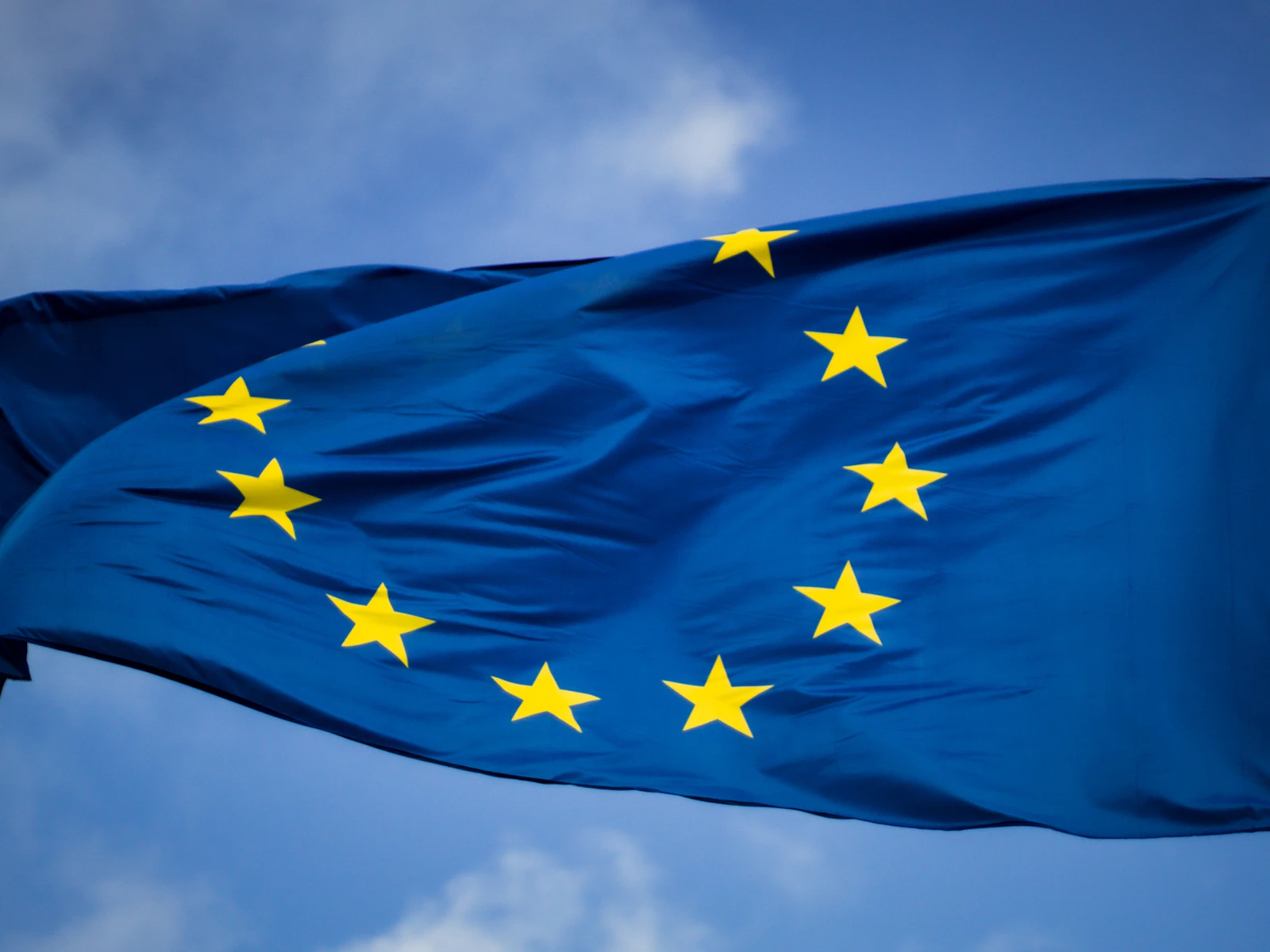
Company Formation in Europe
EU Company Registration
Access the EU Single Market
Choose the Best EU Jurisdiction
Legal and Corporate Support
Why Founders Consult Eesti Firma Before Choosing a Country

Licensed and supervised
Eesti Firma OÜ is a licensed Estonian Trust and Company Service Provider (licence FIU000144), supervised by the Financial Intelligence Unit (Rahapesu Andmebüroo) and a member of the Estonian Chamber of Commerce and Industry.

Jurisdiction assessment
We compare the realistic EU options against your model, markets and distribution plans before anything is filed.
Corporate structuring
New entity, subsidiary, branch or holding — with the tax and liability consequences set out plainly.

A real track record
More than ten years of practice and over 5,000 clients from more than 90 countries, across a wide range of founder profiles and sectors.
People, not a portal
Legal, accounting and tax sit in one team, so we take on the cases automated platforms decline — multiple shareholders, non‑standard ownership, licensed activity.

Support that continues
Documents, registrations, accounting and annual reporting after the company is live. The useful question when choosing an adviser is therefore not whether they can register the company, but whether they can keep it running.
Register a Company in Europe — Choose the Right EU Jurisdiction
The country of registration determines the tax regime, the capital requirement and the administrative load, but never the reach of the market.
Eesti Firma helps international founders and non‑residents select the EU jurisdiction that fits the business model, decide between a new company, a subsidiary and a branch, and complete the registration correctly. As a licensed corporate service provider (TCSP), we work to the corporate and tax requirements that apply from day one.
Access to the EU Single Market — 27 member states and 452 million consumers
Full foreign ownership is standard — no local shareholder or partner required
Remote incorporation is widely available — digital ID, e‑signature or POA
Corporate tax differs in logic, not only in rate — profit or distributions
Licensed corporate service provider (TCSP) — activity licence FIU000144
Our role is not to sell a jurisdiction. It is to help you pick one that still makes sense when the bank asks questions, the first VAT return falls due and the business has doubled in size.
First the right country and structure, then the registration. That order is what prevents a fast incorporation from becoming an expensive rebuild.
Eesti Firma OÜ (registry code 14164797, VAT EE102081480) is a licensed Estonian Trust and Company Service Provider — activity licence FIU000144, supervised by the Financial Intelligence Unit (Rahapesu Andmebüroo) — based at Vesivärava 50, Kadrioru Plaza, Tallinn, supporting local and international entrepreneurs with company formation and market entry across the European Union.
How we see it

Choosing the country is the decision; registering the company is just the paperwork. Almost every structure we are asked to repair was registered correctly — in the wrong place, or in the wrong form.

Co-founder and Chief Legal Officer
Company Formation in Europe: How to Start an EU Business
Key information
Registering a company in Europe gives you an EU legal entity that can trade across the entire single market, invoice in euros, register for VAT and sign contracts as a European counterparty. Non-EU residents can own and direct such a company without relocating and, in several member states, open it entirely online. What differs from country to country is not market access but the tax regime, the capital requirement, the registration route and the ongoing administrative load. There is no single best country to start a business in Europe — the right one depends on the business model, the target markets and whether profit will be reinvested or distributed. This page sets out how European company formation works, how to compare member states, and which legal form — a new company, a subsidiary or a branch — fits the case.
Jurisdiction fit assessed against your actual business model, not a generic ranking
Legal model decided first — new company, subsidiary, branch or analysis before any filing
EU jurisdictions compared on share capital, corporate tax, VAT and registration route
Operational reality covered: banking and EMI onboarding, VAT, contracts, reporting
Cross-border tax exposure flagged early — VAT registration, place of supply, substance
Onward support from incorporation through accounting and annual reporting
Company formation in Europe is a decisive step for founders who want single-market access, European clients and a credible base for long-term growth. The outcome, though, depends far less on the filing itself than on two choices made before it: in which EU country to register, and in which legal form. Get those right and the rest — banking, VAT, contracts, reporting — falls into place; get them wrong and the structure has to be rebuilt.
For more than ten years the Eesti Firma team has supported international entrepreneurs who want to open a company in Europe, enter the single market and keep it running afterwards. Not every project belongs in the same country or the same structure: some need a new company, others a subsidiary in Europe, a branch, or simply a market-entry review before anything is registered at all.
Starting a Company in Europe: Key Facts
What applies across the EU, regardless of the country you choose.
| Topic | Practical explanation |
|---|---|
| Single market access | A company registered in any EU member state trades across the whole single market. The country determines your tax and administrative regime, not your market reach. |
| Company form | There is no EU‑wide LLC. The closest equivalent to an LLC in Europe is the national private limited company — the OÜ in Estonia, the UAB in Lithuania, the sp. z o.o. in Poland, the GmbH in Germany — all offering the same limited liability. |
| Foreign ownership | A non‑EU citizen can own an EU company outright. In Estonia, Lithuania and Poland alike, 100% foreign ownership is permitted, with no local shareholder or partner required. |
| Remote formation | Available in many member states, though by different means: an e‑Residency digital ID in Estonia, a notarised power of attorney in Lithuania, a qualified e‑signature in Poland. |
| Registered address | Every EU company needs a registered address in its country of incorporation for the register and official correspondence. |
| VAT and EORI | Registration thresholds are national, but cross‑border B2B and B2C supplies frequently trigger VAT obligations from the first transaction, well below any threshold. |
| Beneficial owners | UBO disclosure to a national register is mandatory across the EU under the anti‑money-laundering framework, and must be kept up to date. |
| Annual reporting | Annual financial statements must be filed in every member state, with fixed deadlines and penalties for late submission. |
| Banking | A bank or EMI account is a separate compliance decision from registration and is not guaranteed by it. |
Sources: EU company law directives, national commercial registers, national tax authorities.
Key takeaway
A strong EU setup is not about registering as fast as possible. It is about a country and a structure that still work a year later — for the tax office, the bank, your clients and your accountant.
Who Should Register a Company in Europe
Who this is for
Anyone planning to open a company in Europe without relocating, including founders resident outside the EU: international entrepreneurs entering the single market, SaaS and IT teams, consultancies and agencies, e‑commerce sellers planning EU‑wide distance sales, and foreign groups weighing a subsidiary, a branch or a fresh incorporation in the European Union.
An EU company earns its keep where the business needs a European contracting party, euro invoicing, VAT registration inside the single market, or simply the credibility that comes with a European registration code. In practice, opening a company in Europe is worth the administration in these cases:
- International founders entering the European market and contracting with EU clients or partners.
- SaaS and IT businesses that need a scalable EU entity for subscriptions, app stores and payment processing.
- Consultancies and agencies that require a credible European legal presence for B2B contracts.
- E‑commerce sellers planning EU‑wide distance sales, where the OSS scheme and warehousing decide the tax footprint.
- Foreign groups weighing a subsidiary, a branch or a new European company as an expansion vehicle.
- Founders who have not chosen a country yet and want an objective view before committing.
If the project falls outside these patterns, the honest answer is sometimes that an EU company is not yet needed — and we will say so.
New Company, Subsidiary, Branch or Analysis First?
Before the country comes the legal model. Registering an LLC in Europe, in the sense most non‑European founders mean, comes down to a national private limited company — but that is only one of several routes into the single market. A branch and a subsidiary look similar from the outside but differ sharply on liability, taxation and reporting; the wrong choice is expensive to unwind.
| Model | Legal position | Typically suits |
|---|---|---|
| New company | A standalone legal entity with its own liability, tax residence and reporting. | Independent projects, new brands, founder-owned businesses starting fresh in the EU. |
| Subsidiary | A separate entity owned by a foreign parent; liability is ring-fenced, and profit distributions between EU parents and subsidiaries are often exempt from withholding tax. | Existing groups that need an EU contracting entity, local staff or a distinct balance sheet. |
| Branch | Not a separate legal person: the foreign parent carries full liability, while the branch is registered locally and usually forms a permanent establishment. | Established companies extending an existing activity where a separate entity adds no value. |
| Analysis first | No filing yet — a review of market entry, VAT exposure, licensing and substance requirements. | Regulated activities, complex ownership, or where an EU entity may not be necessary at all. |
Sometimes the first step is not incorporation. It is establishing whether a company is needed now, whether a subsidiary serves better than a new entity, or whether the market-entry model itself should change. For group structures, our page on establishing a subsidiary company in Europe goes into more detail.
Which EU Country Should You Register Your Company In?
There is no universal answer, and no country wins on every parameter. The right one is whichever country fits how the business will actually operate, and the assessment tends to follow the same sequence.
-
1
Define the business model
SaaS, consulting, e‑commerce, trading, holding and logistics each pull towards a different answer, and regulated activities narrow the field immediately.
-
2
Map the markets and counterparties
Where the clients, suppliers and warehouses sit drives VAT registration, invoicing logic and, often, where a bank will accept you.
-
3
Settle the corporate structure
New company, subsidiary, branch or holding — decided before registration, not retrofitted afterwards.
-
4
Test the tax logic
Compare when profit is taxed, not only the headline rate: Estonia taxes distributions, Lithuania and Poland tax annual profit, and each has its own small-company relief.
-
5
Check the payment layer
A company must work for banks, payment providers and marketplaces, not only for the register.
-
6
Weigh the running load
Language of filings, accounting standards, e‑invoicing duties and reporting frequency should stay realistic for the scale of the business.
Speed and entry cost matter, but they belong at the end of this sequence, not the start. The cheapest country to register a company in Europe is rarely the best country to run one from: registering wherever the fee is lowest and repairing the structure afterwards is almost always the more expensive route.
Common Mistakes When Opening a Business in Europe
Most problems we are asked to fix were not created at incorporation. They came from the assumptions made around it.
- Account opening is a separate process. Registration does not entitle a company to a bank account; the provider reviews the owners, the model and the source of funds independently.
- VAT arrives earlier than expected. National thresholds are irrelevant for many cross‑border supplies, where registration can be required from the first invoice.
- Management location has tax consequences. A company run entirely from another country risks being treated as tax resident there, whatever the register says.
- Maintenance is permanent. Annual statements, bookkeeping, UBO updates and address upkeep continue whether or not the company trades.
- Licensing is checked late. Financial, crypto‑asset, transport and several other activities need authorisation that should be scoped before the entity exists.
- Popular is not the same as correct. A country that suits a remote consultancy may be a poor fit for a logistics operator with local staff.
Where to Register a Company in Europe: Three Jurisdictions Compared
Asked in the abstract, the question of which EU country is best for registering a company has no useful answer. It helps far more to see how the same parameters diverge in practice. Estonia, Lithuania and Poland are used here as worked examples: three neighbouring member states that answer genuinely different questions. Their standard company forms — the OÜ, the UAB and the sp. z o.o. — are what founders from outside Europe usually have in mind when they talk about setting up an LLC in Europe. The same grid applies to any EU country you might consider.
| Parameter | Estonia | Lithuania | Poland |
|---|---|---|---|
| Standard company | Osaühing (OÜ) | UAB, or MB for small owner-run projects | Spółka z o.o. |
| Share capital | From €0.01 per shareholder | UAB €1,000, at least 25% paid before registration; MB has no minimum | PLN 5,000 (roughly €1,150) |
| Corporate income tax | 22% on distributed profit only; retained and reinvested profit is not taxed | 17% on annual profit; qualifying new small companies pay 0% for two years, then 7% | 19% on annual profit; 9% for small taxpayers and most companies in their first year |
| VAT rate and threshold | 24%; registration from €40,000 of taxable turnover | 21%; registration from €45,000 | 23%; registration from PLN 200,000 |
| Formation route | Fully online with an e‑Residency or EU digital ID; notarial route also available | Notarial procedure, in person or under a notarised power of attorney | Online via the S24 portal with a qualified e‑signature, or by notarial deed |
| Local presence required | Registered address; a contact person where the management board sits abroad | Registered address; no residency requirement for owners or the director | Registered address; no residency requirement for shareholders or the board |
| Administrative character | Highly digital, English-friendly, low routine load | Predictable and rules-based, with a notarial layer | More formal; mandatory KSeF e‑invoicing is being phased in during 2026 |
Learn more
Company formation in Estonia
Company formation in Lithuania
Sources: Estonian Tax and Customs Board (EMTA) and Commercial Register; Lithuanian State Tax Inspectorate (VMI) and Registrų centras; Polish National Revenue Administration and the National Court Register (KRS). Rates current for 2026.
Watch out
Headline rates are the least useful basis for a decision. Estonia’s 22% applies only when profit is distributed, so a reinvesting business may pay nothing for years; Lithuania’s 0% start-up relief is conditional on employee and revenue limits; Poland’s 9% applies to operating income but never to capital gains. The effective outcome depends on your distribution policy, not on which number is smallest.
Matching the Business Model to the Country
The comparison above only becomes useful once it is read against a specific business. In practice, a handful of characteristics decide most cases — and they point towards different types of jurisdiction rather than to one universal winner.
A remote-first, digital jurisdiction suits you when
- the business is digital or service-based rather than tied to one local market;
- profit will be reinvested rather than distributed, so deferring corporate tax has real value;
- the founders want to file and manage everything remotely, in English, with minimal routine;
- the structure must stay flexible for holding activity or future group expansion.
A market-facing jurisdiction fits better when
- the company will employ local staff, hold stock or operate physically in one market;
- profit will be distributed regularly, which changes how the tax comparison lands;
- the licensing regime or payment infrastructure points to a particular country from day one;
- counterparties or regulators expect substance where the activity actually happens.
Most businesses sit somewhere between the two, which is exactly why the assessment is worth doing before the filing rather than after it.
Other EU Countries Founders Ask About
The three examples above are not the only options for European company formation. Several other member states come up regularly, each for a specific reason — and each with trade-offs that only matter once the business model is on the table.
- Latvia. A close Baltic alternative with a distribution-based corporate tax similar in logic to Estonia’s, often considered alongside it.
- Ireland. Chosen for its low trading-income rate and English-language environment, but with higher setup and running costs, plus real substance expectations.
- The Netherlands. A long-standing choice for holding and IP structures, and for groups that need a well-recognised European headquarters.
- Cyprus and Malta. Frequently raised for holding and investment structures; both carry heavier compliance and substance requirements than founders expect.
- Germany and Czechia. Considered where the business needs local operations, staff or proximity to Central European supply chains.
- Non-EU European options. The United Kingdom and Switzerland are European but outside the single market, so EU VAT and customs treatment differ substantially.
If your shortlist includes a country not covered here, the assessment works the same way: model first, jurisdiction second.
What an EU Company Needs After Registration
Registration is a milestone, not the finish line. Whatever EU country you pick, the same operational layer has to be built before the company can trade properly.
- Payment infrastructure. A bank or EMI account, shortlisted and prepared in parallel with incorporation rather than after it.
- Tax registrations. VAT and, for goods crossing the EU border, an EORI number — obtained when your model actually requires them, rather than by default.
- Accounting from the first invoice. Bookkeeping set up before transactions start, not reconstructed at year-end.
- Contracts and terms. Client agreements, terms of service and data protection documentation aligned with EU rules.
- The annual cycle. Financial statements, UBO updates and registered address upkeep on a fixed calendar, in every member state without exception.
Company Formation Department



Frequently Asked Questions
Yes. A citizen or resident of a non‑EU country can own 100% of an EU company, with no local shareholder or partner required. In Estonia, Lithuania and Poland the director may also be a non‑resident. What matters in practice is not nationality but documentation: passports, corporate extracts, apostilles and translations have to line up precisely.
In many member states, yes, but by different routes. Estonia allows fully online incorporation with an e‑Residency digital ID. Lithuania is a notarial procedure that can be completed under a notarised power of attorney. Poland works through the S24 portal with a qualified e‑signature, or by notarial deed. The document preparation, not the filing, sets the timeline.
There is no single answer, and the cheapest option is rarely the best one to operate from. Corporate tax alone illustrates why: Estonia charges 22% only on distributed profit, Lithuania 17% on annual profit with 0% for two years for qualifying new small companies, Poland 19% with a 9% rate for small taxpayers. Which is cheapest depends entirely on whether you reinvest or distribute.
Not as a single EU‑wide form. The closest equivalent to an LLC in Europe is the national private limited company: the OÜ in Estonia, the UAB in Lithuania, the sp. z o.o. in Poland, the GmbH in Germany. A pan-European form does exist — the Societas Europaea (SE) — but it requires substantially higher capital and a cross‑border structure, so it suits large groups rather than new businesses.
No. Company ownership and immigration status are separate matters in every EU member state. Estonian e‑Residency, despite the name, is a digital identity for administering a company online, not a residence permit and not a right to enter or live in the EU. Some countries operate separate start-up or investor visa routes with their own criteria.
A subsidiary is a separate legal entity: liability stays ring-fenced from the parent, and profit distributions between EU parent and subsidiary companies are often exempt from withholding tax. A branch is not a separate legal person, so the foreign parent carries full liability, and the branch usually forms a permanent establishment. Subsidiaries suit groups needing local staff or a distinct balance sheet; branches suit a straightforward extension of existing activity.
No. Account opening is a separate compliance decision made by the bank or electronic money institution, which reviews the owners and beneficial owners, the business model, expected turnover and the source of funds. This is why the shortlist and KYC documents are best prepared in parallel with incorporation rather than afterwards.
Note
The FAQ is for general information only and does not constitute legal or tax advice. Requirements may vary depending on your circumstances.