

EU Transport License in Estonia for Road Haulage Companies
Register an Estonian transport company and apply for an EU Community Licence for paid road freight operations across Europe
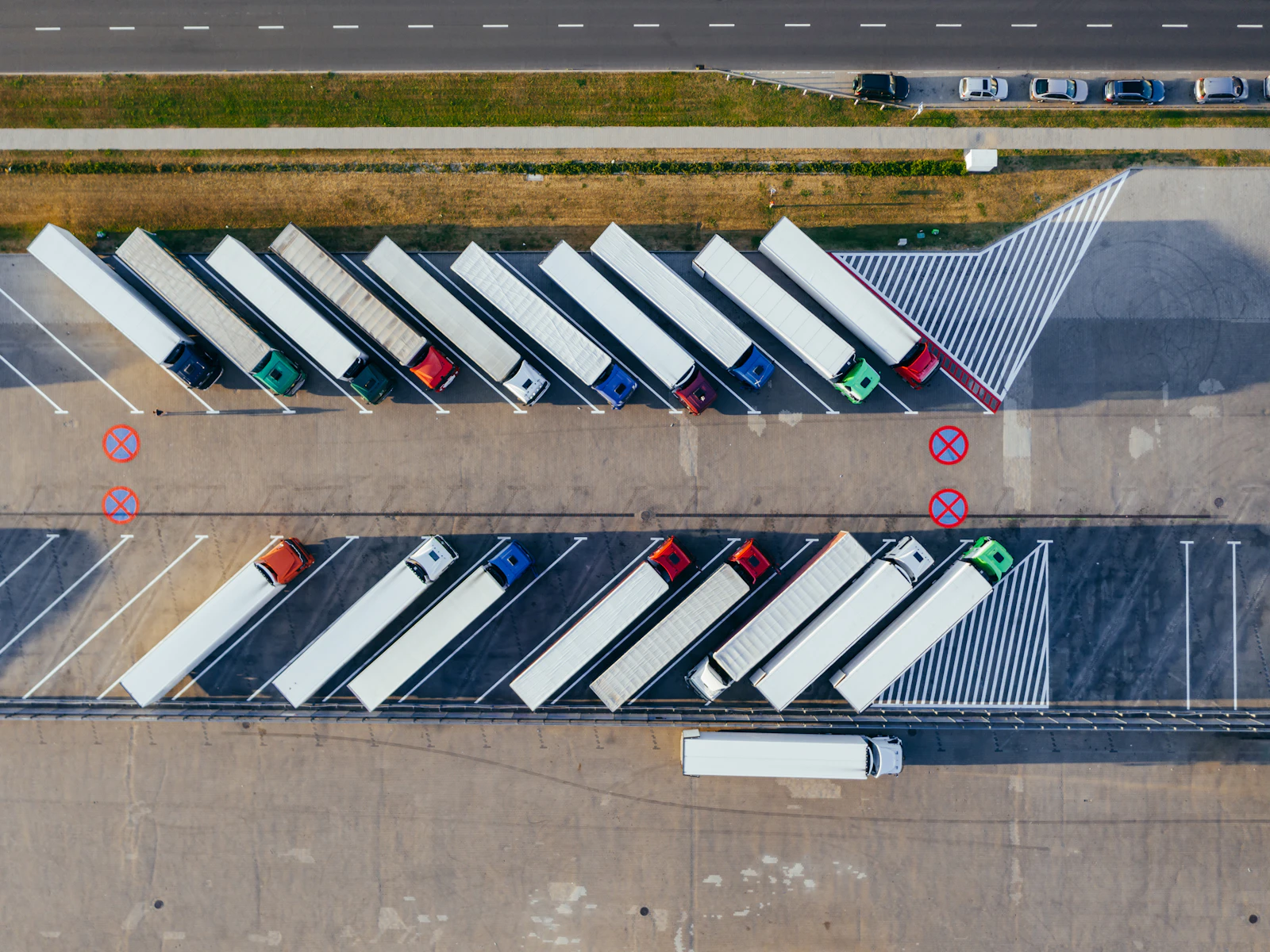
EU Transport License Estonia
EU Community Licence Support
Road Haulage Company Setup
Freight Forwarding License
Freight Transport Across EU
Why Choose Estonia for an EU Transport Company?

Digital company administration
Estonia is known for its digital public services and online business environment. This is useful for international transport operators who want a manageable EU company structure.

EU market access
An Estonian transport company with a valid Community Licence can operate within the EU road haulage framework. This is important for businesses that plan to serve clients in several European countries, work with cross‑border routes, support e‑commerce logistics, or build a long-term freight transport company in Europe.

Favourable reinvestment logic
Estonia’s corporate tax system is attractive for companies that plan to reinvest profits into vehicles, staff, technology, route development, marketing, and business growth. Corporate income tax is generally connected to profit distributions rather than the mere accumulation of retained business profits.
Apply for an EU Transport License in Estonia
Key information
An EU Community Licence allows a transport company to carry goods by road for payment under EU rules. Estonia offers a practical setup for international founders: digital administration, clear licensing requirements, and access to the EU road haulage market.
Estonia can be an effective base for a European transport company because it offers EU market access, digital administration, clear company law, and a tax system that supports reinvestment. For international founders, this can make the process of setting up and managing a road haulage company more practical.
Many company-related procedures can be handled electronically, and non‑resident founders can use Estonia’s e‑Residency programme to register and manage an Estonian transport company remotely.
Who this is for
This service is relevant for entrepreneurs, logistics operators, trucking companies, road haulage businesses, cargo transport companies, freight forwarding companies that plan to operate vehicles, and non‑resident founders who want to register a transport company in Estonia and apply for an EU transport license.
Company registration for transport and logistics activities
Community Licence support for EU road haulage
Application documents prepared for your business model
Transport manager and competence documentation
Financial standing and vehicle-level requirements
Accounting and compliance after the licence is issued
Licensed TCSP · FIU000144
5,000+ clients · 90+ countries
Operating since 2016
EU Transport License in Estonia: Key Facts
A practical summary of the main points entrepreneurs should know before applying for a road haulage licence in Estonia.
| Factor | Practical meaning |
|---|---|
| Official licence name | Community Licence for the carriage of goods by road. |
| Estonian term | Ühenduse tegevusluba veoseveoks. |
| Common search terms | EU transport license, European transport licence, road haulage licence, freight transport licence, trucking licence, cargo transport licence. |
| Main activity covered | Paid carriage of goods by road using licensed vehicles. |
| Legal framework | Estonian Road Transport Act, EU Regulation No. 1071/2009, and EU Regulation No. 1072/2009. |
| Licence validity | Generally issued for 10 years unless the applicant requests a shorter period. |
| Fee | €210 plus VAT, payable to ERAA. |
| Vehicle document | Each licensed vehicle must have a certified true copy of the Community Licence. |
| Core requirements | Effective establishment, good repute, professional competence, and financial standing. |
| Best suited for | Road haulage companies, trucking businesses, cargo carriers, logistics operators, and transport companies operating vehicles in the EU. |
Starting a transport company in the European Union can be a strong opportunity for entrepreneurs who want to enter the European road freight and logistics market. The EU road freight sector remains one of the key parts of the European economy: according to Eurostat, in 2024 total road freight transport in the EU amounted to more than 13.1 billion tonnes and 1,867 billion tonne-kilometres.
For companies that want to carry goods by road for payment, the key authorisation is the EU Community Licence, also commonly searched for as an EU transport license, European transport licence, road haulage licence, or freight transport licence in Estonia. With an Estonian transport company and a valid Community Licence, your business can provide licensed road haulage services in Estonia and across the European Union, provided that all EU and Estonian transport requirements are met.
Eesti Firma assists entrepreneurs with company formation in Estonia, transport licence application preparation, accounting, tax reporting, and ongoing compliance support for Estonian road haulage and logistics companies.
In Estonia, the licence is known as Ühenduse tegevusluba veoseveoks. Entrepreneurs often search for it using different terms, including EU transport license Estonia, EU Community Licence Estonia, road haulage licence Estonia, European transport licence, freight transport licence, and transport company registration in Estonia.
What Is an EU Community Licence for Road Haulage?
An EU Community Licence is an official authorisation that confirms the holder’s right to engage in the carriage of goods for hire or reward. It is the EU form of a road transport operator’s licence — sometimes called an operator licence or O‑licence — and it allows a transport company or haulier to provide paid road freight services using vehicles that fall within the licensing rules.
In Estonia, the Community Licence is issued by ERAA (Eesti Rahvusvaheliste Autovedajate Assotsiatsioon), the Association of Estonian International Road Carriers, which handles road haulage licensing under the framework of the Estonian Road Transport Act and the EU rules on access to the occupation of road transport operator and access to the international road haulage market. Vehicle-related matters, such as vehicle registration and roadworthiness (technical inspection), are handled separately by the Estonian Transport Administration (Transpordiamet).
The licence shows that the transport undertaking meets the required standards of good repute, professional competence, financial standing, and effective establishment. A company that receives a Community Licence must also obtain certified true copies for the vehicles used in licensed transport operations. The certified copy confirms the right to use a specific vehicle for licensed carriage of goods.
Community Licence vs certified true copy
The Community Licence is the main authorisation issued to the transport company. The certified true copy is the vehicle-level document that must be available for each vehicle used under the licence.
This distinction is important. A company may have the main EU transport licence, but it still needs certified true copies for the actual trucks, vans, or vehicle combinations used in road haulage operations.
When Is a Transport License Required in Estonia?
A transport licence is required when a company carries goods by road for payment and the vehicle falls within the relevant weight thresholds. It is the carriage of goods for hire or reward — carrying goods for third parties for payment — that triggers the requirement, whereas transporting your own goods on own account is generally treated differently. The rules also differ depending on whether the transport is national or international.
Quick answer
If your company plans to carry goods by road for hire or reward in the EU, it may need an EU Community Licence. In Estonia, this licence is required for paid freight transport with vehicles or vehicle combinations above 3.5 tonnes, and for international paid road haulage with vehicles above 2.5 tonnes. Each licensed vehicle must also have a certified true copy of the Community Licence.
When You Need an EU Transport License
A simple table explaining when the Estonian Community Licence is usually required for road freight operations.
| Activity | Vehicle threshold | Licence position |
|---|---|---|
| Paid national carriage of goods in Estonia | Vehicle or vehicle combination above 3.5 tonnes | Community Licence and certified true copy are generally required |
| Paid international carriage of goods in the EU | Vehicle or vehicle combination above 2.5 tonnes | Community Licence and certified true copy are generally required |
| Pure freight forwarding or logistics brokerage | No own or leased vehicles operated by the company | Road haulage licence may not be required, but tax, contractual, and business obligations may still apply |
| Use of non‑EU drivers for international carriage | Depends on driver status and operation type | Driver attestation may be required in addition to the Community Licence |
This is why it is important to analyse the actual business model before applying. A company that only arranges shipments may have a different regulatory profile from a company that physically carries goods by road using trucks, vans, or vehicle combinations.
This does not remove route-specific, cabotage, driver posting, tax, or employment obligations, but it gives the company the core authorisation needed for licensed EU road haulage.
EU Transport License Requirements in Estonia
To obtain an EU transport license in Estonia, the applicant must meet the core requirements set by EU and Estonian law. These requirements are intended to make sure that the road transport operator is professionally competent, financially stable, properly established, and reliable.
Clear licensing framework
Estonian transport licensing follows EU rules and national legislation. The main requirements are clear: the company must be properly established, have a qualified transport manager, maintain good repute, show sufficient financial standing, and keep required documents available.
A transport business still needs real compliance, proper documents, and a working operational structure. However, Estonia’s digital environment can reduce administrative friction and make company management more efficient.
Effective establishment
The company must be established in Estonia, typically with its operating base in Tallinn, and must keep transport-related business documents available at the relevant address. These may include accounting documents, personnel records, vehicle documents, and data related to drivers’ driving and rest periods.
For non‑resident founders, this requirement is especially important. A transport company cannot be treated as a purely paper structure. It must be organised in a way that meets the establishment and document-keeping requirements.
Good repute
The company, its chief executive, and the transport manager must meet the good repute requirement. Serious infringements related to criminal law, transport rules, tax, customs, employment, traffic safety, or commercial activity may create problems during the licence application or later compliance checks.
Professional competence
The company must appoint a qualified transport manager. This person is responsible for the effective and continuous management of transport operations and must hold a Certificate of Professional Competence (CPC) in road haulage, which proves the required professional competence.
Depending on the structure, the transport manager may be a board member, employee, or contracted person. If the transport manager is appointed under a contract, the agreement must properly describe the person’s responsibilities and the scope of transport management duties. If your company does not yet have a suitable transport manager, Eesti Firma can help source a qualified professional who meets the professional competence and good repute requirements.
Financial standing
The company must prove that it has sufficient financial resources to operate a transport business. Financial standing is one of the most important requirements for obtaining and maintaining a road transport operator licence.
Financial Standing Requirements
A practical summary of the minimum financial standing thresholds for road haulage operators.
| Vehicle category | First vehicle | Each additional vehicle |
|---|---|---|
| Vehicles above 3.5 tonnes | €9,000 | €5,000 |
| Vehicles above 2.5 tonnes and up to 3.5 tonnes | €1,800 | €900 |
Financial standing is not only checked at the moment of application. The company must continue to meet the requirement during the validity of the Community Licence. Depending on the case, financial standing may be shown through annual accounts, a bank guarantee, insurance, or another acceptable document.
For founders who want a structured and transparent route into the EU transport market, Estonia can be a practical jurisdiction for company formation and road haulage licence application.
Documents Needed for the Estonian Transport Licence Application
The exact document package depends on the company, transport manager arrangement, vehicle structure, and whether the application concerns the main Community Licence, certified true copies, or driver-related documents. In general, the following documents may be required:
- Application for the Community Licence.
- Estonian company details and registry information.
- Address where transport-related documents are kept in Estonia.
- Details of the chief executive and transport manager.
- Transport manager appointment document.
- Written consent of the transport manager where required.
- Proof of professional competence of the transport manager.
- Confirmation that the applicant meets establishment requirements.
- Documents proving financial standing.
- Vehicle registration certificate or vehicle use contract.
- Roadworthiness confirmation where required.
- Driver attestation documents where applicable.
A complete and correctly prepared application file is important because missing or incorrect documents may delay the licensing process. If the application contains deficiencies, the applicant may be asked to correct them, and the review period may be paused until the missing information is provided.
How to Obtain an EU Transport License in Estonia
The process of obtaining a road haulage licence in Estonia should be planned carefully. In practice, the Community Licence is generally processed within up to 30 calendar days from submission of a complete application and is issued for up to 10 years. The company structure, transport manager, financial standing, vehicle documents, and ongoing compliance model should be considered before the application is submitted.
-
1
Register an Estonian transport company
The first step is to register a legal entity in Estonia. For most entrepreneurs, the practical company type is an Estonian private limited company, known as an OÜ. The company should have the correct business activity, management structure, legal address, and accounting setup.
Eesti Firma can assist with the process to register an Estonian company and prepare it for future road haulage, trucking, logistics, or freight transport operations.
-
2
Organise the transport manager
The company must appoint a qualified transport manager who holds a valid Certificate of Professional Competence (CPC) and meets the professional competence and good repute requirements. The appointment document and supporting documents should be prepared in line with the applicable rules.
This is one of the most important parts of the application because the transport manager is responsible for the effective and continuous management of the company’s transport operations.
-
3
Prepare financial standing documents
The company must show sufficient financial standing based on the number and type of vehicles used. Financial standing should be planned before the application because it affects both the licence application and the number of vehicles the company can operate under certified true copies.
-
4
Submit the Community Licence application
The application may be submitted electronically through the relevant Estonian systems, through ERAA self‑service, by signed email, or by post, depending on the chosen method and procedural requirements.
The standard processing time for the Community Licence is up to 30 calendar days after the required documents have been submitted. The licence is not considered automatically granted if the review period expires.
-
5
Apply for certified true copies for vehicles
After the Community Licence is issued, the company must obtain certified true copies for the vehicles used in licensed road haulage operations. A certified true copy is connected to a specific vehicle and must be available for inspections where required.
-
Start operations and maintain compliance
Once the licence and vehicle documents are in place, the company can begin licensed freight transport operations. Ongoing compliance is essential. The company must keep proper accounting records, vehicle documents, employment documents, driver records, tachograph data, and information related to driving and rest periods.
Changes in the company, transport manager, address, or licence data may require notification or a new licence document, depending on the nature of the change.

EU Transport License vs Freight Forwarding License
Many entrepreneurs use the terms freight forwarding license, logistics license, cargo transport permit, and transport company license interchangeably. However, from a legal and practical point of view, these activities can be different.
Freight forwarding usually means organising transportation, arranging carriers, preparing documents, coordinating routes, and managing logistics for clients. A freight forwarder may act as an intermediary and may not physically carry the goods.
Road haulage means carrying goods by road for payment using trucks, vans, or vehicle combinations. This is the activity that usually triggers the need for an EU Community Licence when the vehicle thresholds are met.
Therefore, a company that only arranges shipments may not need the same licence as a company that operates vehicles. But if a freight forwarding company also uses its own or leased vehicles to carry goods for hire or reward, it may need an EU transport license and certified true copies for the vehicles.
Practical conclusion
Freight forwarding and road haulage are not the same. If your company operates vehicles for paid carriage of goods, an EU Community Licence may be required. If your business model includes operating vehicles for paid carriage of goods, focus on the EU Community Licence and road haulage requirements. If your business only provides logistics coordination or freight forwarding without operating vehicles, the licensing position should be analysed separately.
Ongoing Compliance for EU Road Haulage Companies
Obtaining the Community Licence is only the first part of building a compliant transport business. A licensed road haulage company must continue to meet legal, financial, tax, employment, and operational requirements after the licence is issued.
This does not mean that Estonia is tax-free. A transport company must still comply with accounting, VAT, payroll, social tax, reporting, and cross‑border tax rules where applicable. However, Estonia’s reinvestment logic can be commercially useful for growing transport and logistics businesses.
Ongoing compliance may include:
- Maintaining financial standing during the licence validity period.
- Keeping a qualified transport manager in place.
- Holding valid certified true copies for vehicles.
- Maintaining vehicle registration and roadworthiness documents.
- Complying with driving and rest time rules.
- Using digital tachographs where required.
- Keeping CMR consignment notes under the CMR Convention, plus other freight and transport documents.
- Complying with VAT, payroll, and accounting obligations.
- Monitoring cabotage, posting of drivers, and cross‑border transport rules under the EU Mobility Package.
- Notifying relevant changes where required.
For this reason, the best approach is to treat the licence as part of a wider business setup. Company formation, accounting, tax registration, vehicle planning, transport manager documents, and operational compliance should be aligned from the beginning.
How Eesti Firma Can Help
Eesti Firma is a licensed Estonian Trust and Company Service Provider (FIU000144), supervised by the Estonian Financial Intelligence Unit, and has served more than 5,000 clients from over 90 countries since 2016. We provide practical support for entrepreneurs who want to register an Estonian company and apply for an EU transport license. Our role is not limited to filling in forms. We help structure the process so that the company, documents, transport manager, accounting, and compliance obligations fit the planned business model.
Our services may include:
- Estonian OÜ registration for transport and logistics activities.
- Legal address and contact person services.
- Preparation of transport licence application documents.
- Support with transport manager appointment documents.
- Assistance with finding a qualified transport manager where one is needed.
- Guidance on financial standing requirements.
- Support with certified true copies for vehicles.
- VAT and EORI-related guidance where needed.
- Accounting services for Estonian transport companies.
- Tax reporting, payroll, and ongoing company administration.
- Compliance support after the licence is issued.
If you are planning to build a road haulage, trucking, freight transport, or logistics company in Europe, Estonia can offer a practical route into the EU market. Eesti Firma can help you understand the requirements, register the company, prepare the licence application, and maintain the company after operations begin.
Legal Department




Frequently Asked Questions
The official term is a Community Licence for the carriage of goods by road. Many business owners also call it an EU transport license, European transport licence, road haulage licence, or freight transport licence, but the legal meaning is connected to paid carriage of goods by road.
No. Freight forwarding usually means organising shipments, finding carriers, coordinating routes, and managing documents. Road haulage means physically carrying goods by road for payment. A company may need a Community Licence when it operates vehicles for paid carriage of goods.
For international paid carriage of goods, licensing rules may apply to vehicles or vehicle combinations above 2.5 tonnes. For heavier vehicles, the usual threshold is above 3.5 tonnes, depending on whether the operation is national or international.
The Community Licence is issued to the transport company, while a certified true copy is linked to a specific vehicle. It confirms that the licence holder may use that vehicle for licensed carriage of goods by road.
A transport manager is responsible for the effective management of transport operations. This role is connected to professional competence, good repute, compliance with transport rules, and the company’s ability to operate as a reliable road transport undertaking.
Before starting operations, a company should check the vehicle weight, transport manager arrangement, financial standing, vehicle documents, driver status, cabotage rules, tachograph obligations, and ongoing accounting and compliance requirements.
Note
The FAQ is provided for general informational purposes only and does not constitute legal, tax, or financial advice. Requirements and procedures may vary depending on jurisdiction, business model, and individual circumstances.