

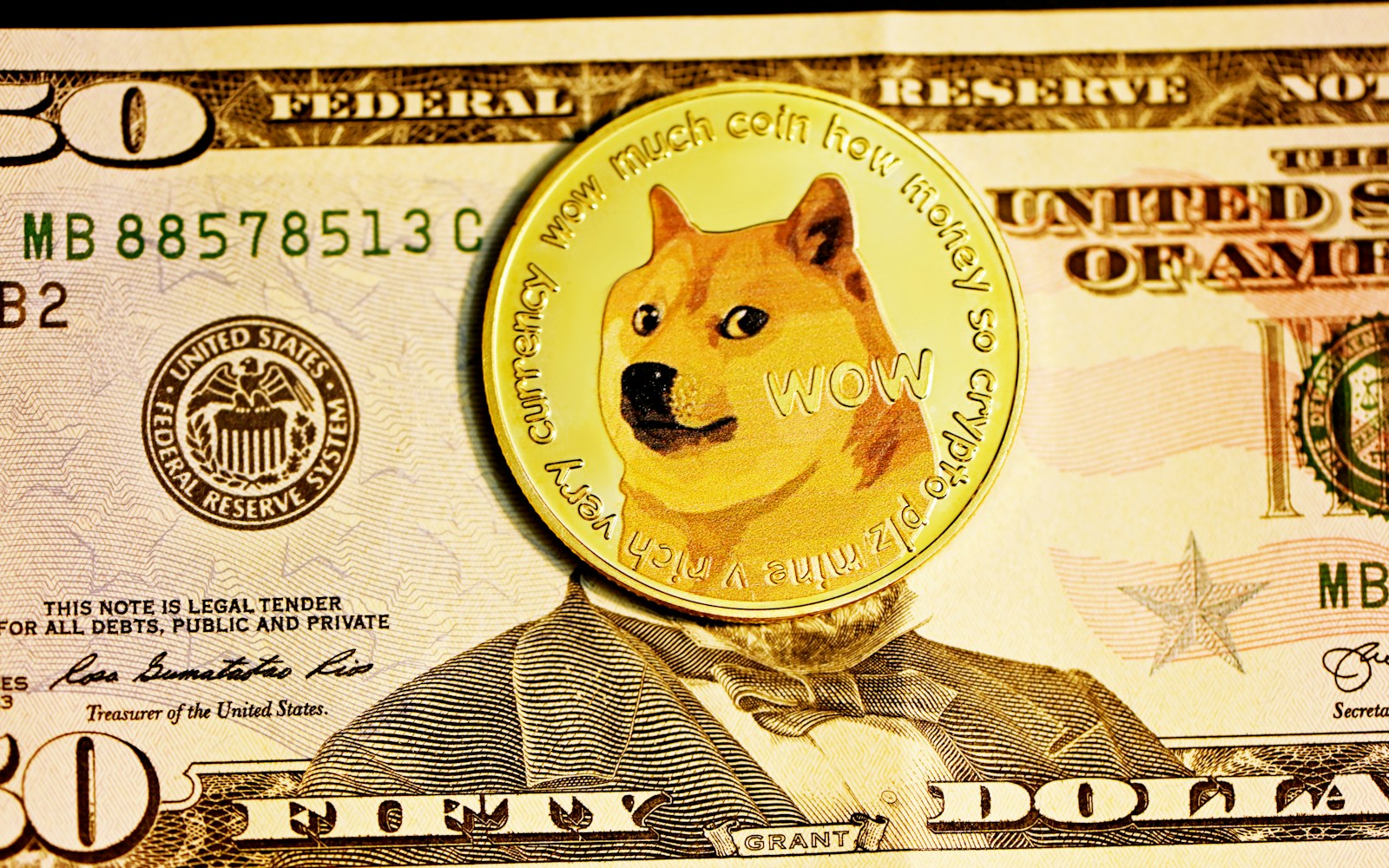

A memecoin — also written meme coin, and sometimes called a meme token — is a cryptocurrency whose value rests on an internet joke, a mascot or a cultural moment rather than on technology, revenue or a promised service. Dogecoin, Shiba Inu and Pepe are the names most people have heard, and between them they turned a running gag into one of the busiest corners of the crypto market.
This page is a plain-language explainer: what the term means, how these tokens are created and traded, which risks beginners underestimate, and how European rules treat them. It is not investment advice.
Memecoin Meaning in Plain Language
A meme coin takes its identity from an internet meme — a dog breed, a cartoon frog, a passing catchphrase — rather than from anything it does. Most are tokens deployed on an existing blockchain in minutes, built on code that thousands of other projects already share. Dogecoin is the notable exception: it runs its own chain, forked from an earlier network back when issuing a token on someone else’s blockchain was not yet routine.
In plain terms
A memecoin is a crypto-asset that does not claim to solve a problem. Conventional projects sell a use case; a meme coin sells belonging to a punchline. That is the whole distinction — and it is also the whole risk.
That absence of a stated purpose is deliberate. A lending protocol can be judged against what it promised to deliver; a memecoin promises nothing, so there is no roadmap to miss. Its price is a direct measure of hype — how many people are paying attention, and how loudly.
How a Meme Token Differs from Other Cryptocurrencies
The clearest way to place a meme token is to compare what moves its price against the other cryptocurrencies a newcomer will meet.
| Category | Familiar example | What drives the price |
|---|---|---|
| Payment coin | Bitcoin | Fixed supply, network security and use as a store of value. |
| Platform token | Ether | Demand for the applications built on the underlying chain. |
| Utility token | Exchange and protocol tokens | Access to a product, fee discounts or voting rights. |
| Stablecoin | Euro- or dollar-referenced tokens | A reserve of assets the issuer holds to keep the value near its peg. |
| Memecoin | Dogecoin, Shiba Inu, Pepe | Attention alone: community size and social-media momentum. |
Read the last column downwards and the pattern is hard to miss. Every other category has something underneath the price. Memecoins have an audience, and audiences move on.
How a Memecoin Is Created and Where It Trades
The life cycle explains most of what follows. Nearly every meme coin passes through the same four stages:
- Issue. Someone deploys a token on a public blockchain and sets the total supply. No permission is needed and the step costs very little.
- Seed liquidity. The creator locks the new token together with an established one into a liquidity pool on a decentralised exchange. That pool is what makes trading possible.
- Build the hype. The community takes over with memes, group chats and endorsements. This stage is the product, and it is where price is made.
- Listing or fade. A small minority reach large exchanges. The overwhelming majority run out of attention.
Because those first stages are cheap and open to anyone, new tokens appear constantly. Survivorship bias does the rest: the few that succeeded are famous, and the tens of thousands that went to zero are discussed nowhere.
Why People Buy Meme Coins
The appeal is real, even if the economics are not. Three motivations come up repeatedly:
- A low unit price. Owning millions of a token worth a fraction of a cent feels more accessible than owning a sliver of something expensive, though the maths is identical.
- Community and entertainment. The token works as a membership card, and the deliberately absurd marketing makes following a meme coin closer to a spectator sport than to portfolio management.
- Speculation. The chance of an outsized move attracts traders and small investors who accept that volatility works just as violently in reverse.
Are Memecoins Safe? The Risks That Matter
None of what follows is exotic. All of it is routine, which is precisely why it belongs before a purchase rather than after.
Extreme Volatility with No Floor
A memecoin can multiply and give it all back within a day. Because nothing underpins the price, there is no level at which buyers reliably reappear — it can fall to nothing and stay there.
Concentrated Ownership and Whale Wallets
Supply is often held by a handful of wallets, sometimes including the creator’s. A single large holder can move the price alone, and whoever bought last carries the loss.
Rug Pulls, Scams and Price Manipulation
Whoever seeded the liquidity pool can also empty it, and whoever holds most of the supply can sell it in one transaction. Either move leaves the remaining buyers with a token and no market. Coordinated promotion followed by quiet insider selling — a pump and dump — is the same scam in slower motion.
Before you consider a memecoin
Treat any amount committed to a meme coin as money you are prepared to lose. There is no consumer safety net comparable to regulated financial products, and one token’s past performance tells you nothing about the next.
Are Meme Coins Regulated in the EU?
There is no European law aimed specifically at meme coins, and there is no memecoin category in EU legislation. That does not leave them unregulated. They are ordinary crypto-assets, covered by the general framework of the Markets in Crypto-Assets Regulation, known as MiCA. Three consequences matter for a newcomer.
First, disclosure. Where someone offers a crypto-asset to the public in the EU or seeks its admission to trading, MiCA generally requires a crypto-asset white paper. Crypto-assets with no identifiable issuer fall outside that duty, which is how a genuinely ownerless meme coin escapes it. A named team launching and promoting a token does not: the obligation follows the offeror, not the mascot.
Second, conduct. MiCA’s market-abuse provisions cover insider dealing and manipulation for crypto-assets admitted to trading. A coordinated pump does not escape the law merely because it began as a joke.
Third, intermediaries. Whoever runs the trading platform, holds assets for clients or executes orders needs authorisation as a crypto-asset service provider, whatever the token happens to be. That framework is set out on our page about the MiCA regulation on markets in crypto-assets.
In Estonia, supervision of crypto-asset service providers sits with the Financial Supervision Authority. The earlier registration regime run by the Financial Intelligence Unit has been discontinued, and an authorisation granted here can be passported across the European Economic Area. Individual memecoins are not licensed or supervised; the businesses that handle them are.
Meme Coin Glossary for Beginners
The vocabulary is a barrier of its own. These are the terms that come up most often around meme coins.
| Term | What it means |
|---|---|
| Liquidity pool | Two tokens locked in a smart contract so that people can swap one for the other. For a memecoin this pool is usually the only place it can be sold at all. |
| Decentralised exchange | A smart contract that swaps tokens automatically, with nobody vetting what gets listed. Almost every meme coin starts trading here — which is why anyone can launch one. |
| Rug pull | The people behind a token drain its liquidity or sell their whole holding at once, leaving buyers with an asset no one will touch. |
| Pump and dump | Coordinated promotion inflates the price, then the organisers sell into the demand they created. Nothing anchors a memecoin’s price, which makes it easy to run. |
| Whale | A holder large enough that one transaction moves the price. In meme coins this is often the creator or an early buyer, since supply tends to sit in few wallets. |
| Market capitalisation | Price multiplied by circulating supply. A memecoin can show a large figure while the pool behind it holds very little real money. |
The Bottom Line
Meme coins are a real phenomenon, not a passing curiosity: they show how quickly attention becomes a tradable asset. They are also the most speculative corner of a speculative market. Understanding both halves of that sentence separates an informed observer from an accidental participant.
Frequently Asked Questions
It is a crypto-asset built around an internet joke or mascot rather than around a product. Its price reflects how much attention the meme is receiving, not revenue, usage or assets held in reserve.
No. Both are crypto-assets, but Bitcoin has a capped supply and an established role as a store of value, while a memecoin is typically a token issued on someone else’s blockchain with no stated purpose and no limit on how many rivals can appear tomorrow.
Trading them is not prohibited. They are treated as ordinary crypto-assets under MiCA, which means no rules target them specifically, while businesses providing services around them must be authorised and supervised.
It is the moment the people behind a token cash out and walk away — sometimes in a single transaction, sometimes gradually, which is harder to spot. Either way, the holders left behind cannot sell.
There is no reliable test. Concentrated ownership, unlocked liquidity, anonymous creators and pressure to buy quickly are common warning signs, but their absence proves nothing.
